The Great South Divide: Why Southland and West Coast Are Defying the NZ Property Slump
A Two-Speed Housing Market Emerges Across New Zealand
New Zealand’s residential property market is presenting two distinctly different narratives. Across the national landscape, overall house price movement appears subdued, with the national median price lingering around $775,000—a minor year-on-year rise of roughly 1.3%. On the surface, the broader market seems to be treading water as elevated borrowing costs, cautious buyer sentiment, and cost-of-living pressures restrain overall transaction volume nationwide.
Beneath this static national headline, a pronounced regional divergence has taken hold. Data published by the Real Estate Institute of New Zealand (REINZ) reveals that while major North Island metropolitan centers face persistent price softness and bloated inventory levels, key South Island markets are outperforming the nation. Provincial regions in the south are recording record median sale prices and leading New Zealand in value growth, creating a clear geographical split in market momentum.
North Island Heavyweights Stalled by Inventory Accumulation
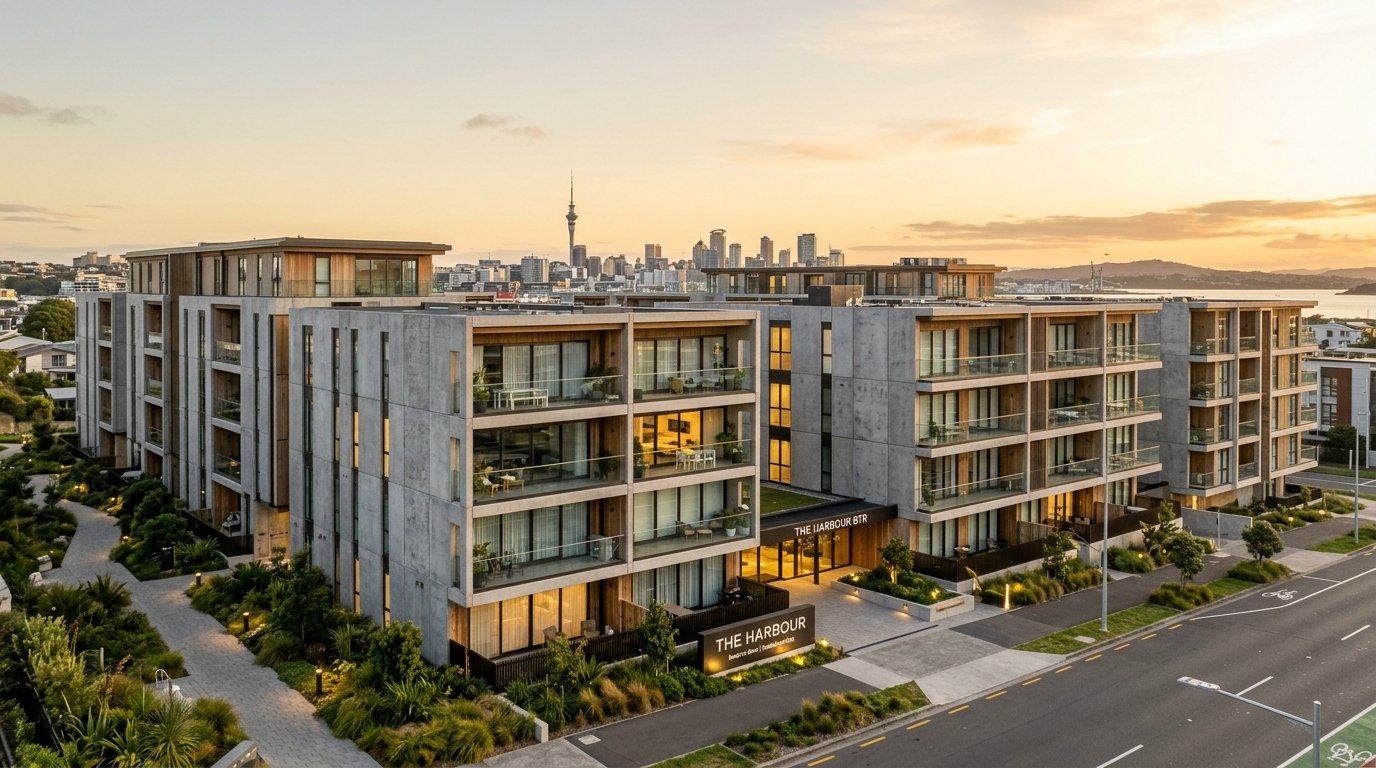
In Auckland and Wellington, the property cycle continues to favor buyers, driven by a heavy backlog of unsold homes and cautious purchasing behavior. Sellers in these major centers are finding that properties take longer to clear, forcing many to adjust price expectations downward to secure a transaction.
In Auckland, the median home price stands at $1,005,000, representing a modest annual increase of 2.6%. However, the underlying REINZ House Price Index (HPI) for the Auckland region declined 1.2% year-on-year, illustrating that true capital value growth remains under pressure once property mix adjustments are taken into account. Total available listings across the region remain elevated, providing buyers with substantial choice and eroding urgency during price negotiations.
Wellington exhibits a similar pattern of stagnation. The capital city region recorded a median house price of $750,000, maintaining a subdued trajectory over the past twelve months. With high levels of residential stock sitting on the market and reduced public sector employment growth weighing on buyer confidence, Wellington vendors are competing in a buyer-friendly environment where discounted sales are frequently required to finalize deals.
Southland and West Coast Lead National Value Gains
In stark contrast to the North Island metropolitan slowdown, the lower South Island is generating some of the strongest growth figures seen in recent years. Southland and the West Coast have consistently topped national leaderboards for percentage value gains, driven by exceptional buyer demand relative to available supply.
According to REINZ figures, Southland achieved a historic benchmark with a record median price of $540,000, marking a 10.2% year-on-year jump. Southland also delivered the highest annual House Price Index growth in New Zealand at 5.8%. Within the region, Invercargill City reached an all-time record median price of $540,000, reflecting sustained buyer activity across all price brackets. High-end sales above $1 million, previously rare in Southland, are becoming far more regular, pushing overall averages higher. Standout provincial pockets including Lorneville, Wallacetown, and Te Anau recorded localized price increases exceeding 14% year-on-year.
The West Coast has matched this momentum, recording the strongest annual median price growth in the country at 12.9%, lifting its regional median to $474,350. Smaller regional hubs such as Ngahere in the Grey District experienced double-digit capital gains, as buyers pursue entry-level affordability in locations where median values remain well below the national baseline.
Canterbury Provides a Solid Engine of Growth
Positioned between the lower South Island provincial surge and the North Island slowdown, Canterbury continues to perform as a key driver of South Island strength. The region recorded an equal record median price of $725,000, reflecting a robust 6.6% year-on-year increase.
Canterbury recorded the second-highest annual House Price Index growth nationally at 3.0%, supported by fast stock absorption rates and consistent buyer migration from other parts of the country. Territorial authorities within Canterbury also set individual benchmarks, with Kaikōura District reaching a record median price of $910,000, up 4.6% from its previous high set earlier in the cycle. Unlike Auckland, where new townhouse developments face slow turnover, Canterbury’s residential stock is being absorbed smoothly by first-home buyers and relocating families.
Structural Factors Driving the Southern Outperformance
Several underlying economic factors explain why the South Island is outperforming North Island urban centers during this phase of the property cycle:
- Relative Debt Affordability: Entry-level housing on the West Coast ($474,350) and in Southland ($540,000) requires significantly lower mortgage commitments compared to Auckland ($1,005,000) or Wellington ($750,000). In an environment where borrowing costs remain elevated, buyers naturally gravitate toward markets with lower debt service burdens.
- Primary Sector Cash Flow: Strong agricultural and rural commodity returns across Southland and Canterbury have injected solid cash flow into local economies, bolstering regional consumer confidence and household balance sheets.
- Balanced Listing Supply: Unlike Auckland and Wellington, where listing backlogs have built up over consecutive quarters, South Island regions maintain tighter inventory levels, preventing supply from overwhelming active buyer demand.
- Inter-Regional Migration: Remote workers, retirees, and owner-occupiers continue to relocate from upper North Island centers to South Island destinations in search of reduced mortgage stress and better quality of life.
Market Outlook: A Lasting Rebalancing
The latest REINZ data underlines a broader structural shift in New Zealand real estate. While headline national price indices may give the impression of a market stuck in neutral, regional realities differ vastly. Metropolitan markets in the North Island are undergoing a prolonged digestion phase as heavy listing supply clears and affordability constraints linger. Meanwhile, provincial South Island markets—anchored by Southland, West Coast, and Canterbury—continue to offer compelling yield and capital growth profiles.
For investors and owner-occupiers navigating the current environment, success hinges on recognizing these regional variations. The South Island’s combination of accessible entry prices, healthy economic fundamentals, and disciplined listing supply suggests that the Great South Divide will remain a defining feature of the New Zealand property landscape in the months ahead.