Wellington Buyers Seize Advantage as Civil Service Contraction Leaves Capital With Inventory Glut
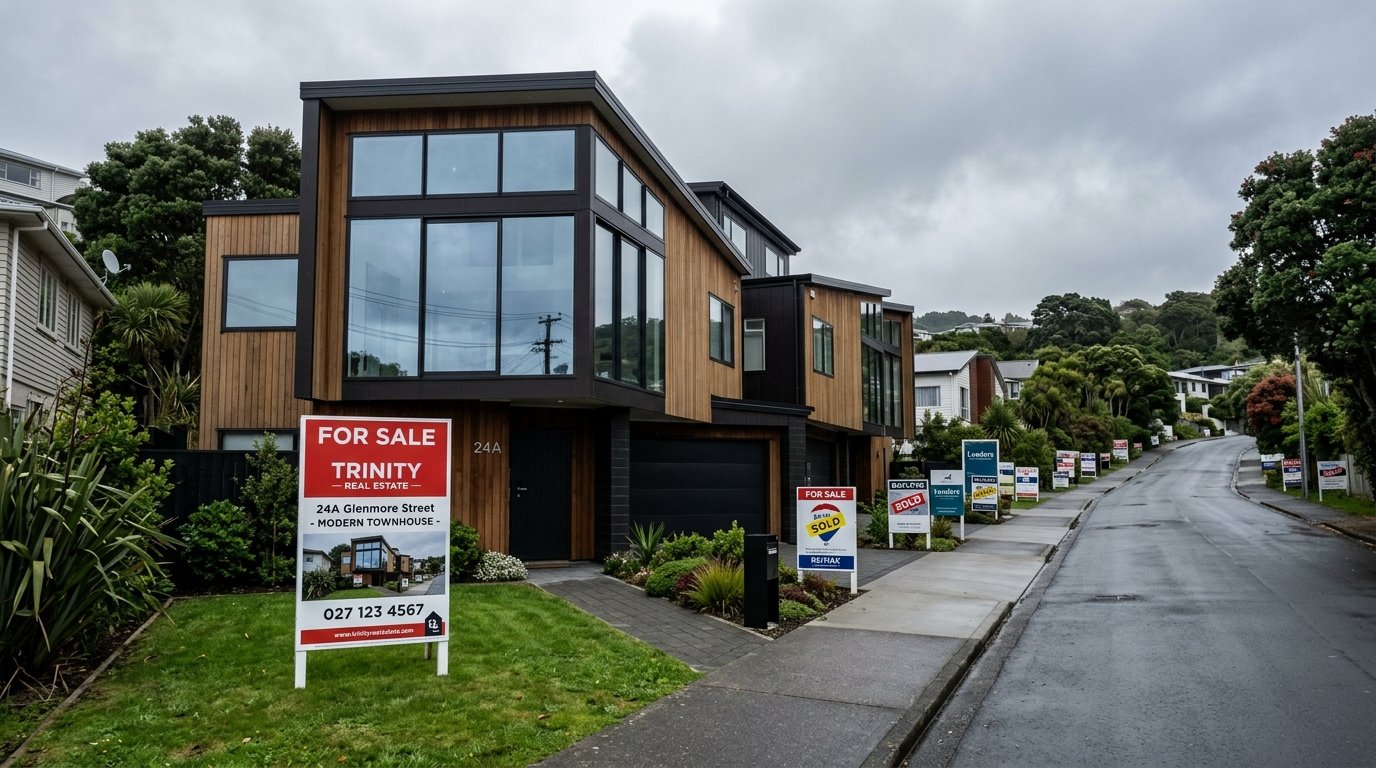
Greater Wellington remains New Zealand’s most pronounced buyer’s market. While declining interest rates and easing monetary policy have started to revive enquiry across parts of the country, the capital’s residential property market continues to face a unique set of structural headwinds. The ongoing downsizing of the public service, paired with an elevated stock of unsold homes, has handed purchasers significant negotiating leverage across all main territorial authorities.
Elevated Supply Clashes With Economic Uncertainty
Data from CoreLogic NZ shows that home values across the Wellington region remain heavily discounted compared to their late-2021 and early-2022 peaks. Greater Wellington values sit roughly 25% to 27% below those historic highs, representing the deepest peak-to-trough correction of any major metropolitan area in the country.
Ordinarily, successive reductions in mortgage lending rates would trigger a rebound in clearance rates and price competition. In Wellington, however, the direct fallout from central government expenditure reductions has created a persistent sentiment drag. With thousands of public sector roles disestablished and wider restructuring continuing across ministries, household income security in the region has deteriorated. As a result, prospective buyers with secure financing are in no rush to bid up prices, choosing instead to negotiate hard on price, terms, and conditions.
Sub-Market Breakdown: City Centre to the Suburbs
The supply-demand imbalance is visible across Wellington City, Lower Hutt, and Porirua, though local drivers vary across different price bands and property categories.
- Wellington City: Dwelling values across the central city and surrounding suburbs have continued to track sideways, with the median property value sitting near $880,000. CoreLogic records show Wellington City values remain down approximately 25.3% from peak levels. Apartments and townhouses have experienced the heaviest discounting, driven by insurance cost increases, higher body corporate levies, and soft demand from property investors.
- Lower Hutt: In Lower Hutt, median values have settled around $677,000 to $700,000, representing a fall of roughly 27% from the peak. Lower Hutt has seen substantial townhouse completion volumes enter the market over the past two years, adding to the pool of available stock. Vendors in suburbs such as Petone, Waterloo, and Wainuiomata face fierce competition from neighbouring listings.
- Porirua: Values across Porirua have shown slight resilience compared to the Hutt Valley but remain down roughly 23% from their record highs, with a current median value hovering near $715,000. While newly completed residential subdivisions in northern corridors have expanded choice, transaction volumes have slowed as buyer caution limits price growth.
First-Home Buyers Anchor Transaction Activity
Despite the broader economic malaise, market activity has not ground to a complete halt. Instead, the composition of active purchasers has shifted dramatically. First-home buyers now represent the single most active participant segment in the region.
CoreLogic buyer classification metrics indicate that first-home buyers account for more than 35% to 40% of all purchases in Lower Hutt and Porirua, alongside strong participation across Wellington City’s outer suburbs. This cohort has taken advantage of improved affordability metrics, lower deposit thresholds, and a lack of aggressive competition from mortgaged property investors.
Buyers entering the market today enjoy advantages rarely seen over the past decade:
- Substantial choice across both established standalone dwellings and newly built medium-density townhouses.
- The ability to submit conditional offers that include extended finance clauses, building inspections, and title reviews without fear of being immediately outbid.
- Significant vendor flexibility on settlement dates and price expectations, particularly for properties that have lingered on the market for more than 60 days.
Investor Caution and Rental Yield Dynamics
While first-home buyers are capitalising on current conditions, residential property investors remain largely defensive. Although the restoration of mortgage interest deductibility and the reduction of the Bright-Line test have improved theoretical holding costs, local economic conditions have kept capital growth expectations muted.
Rents across Greater Wellington have flattened or softened over the past 12 months as public sector job losses reduce tenant demand in inner-city locations. With rising local council rates and surging insurance premiums eroding net yields, many private landlords are choosing to rationalise their portfolios by listing secondary assets, contributing directly to the region’s inventory overhang.
What Lies Ahead for the Wellington Market
Looking ahead into the remainder of the year, property market analysts anticipate that Wellington values will continue to track relatively flat, with modest downside risk remaining for properties requiring deferred maintenance or renovation.
The recovery of the capital’s property values will depend on when public sector restructuring reaches a clear conclusion and whether regional employment stabilises. Until active listing numbers are absorbed by sustained demand, the capital will remain firmly in the hands of decisive, well-capitalised buyers.